
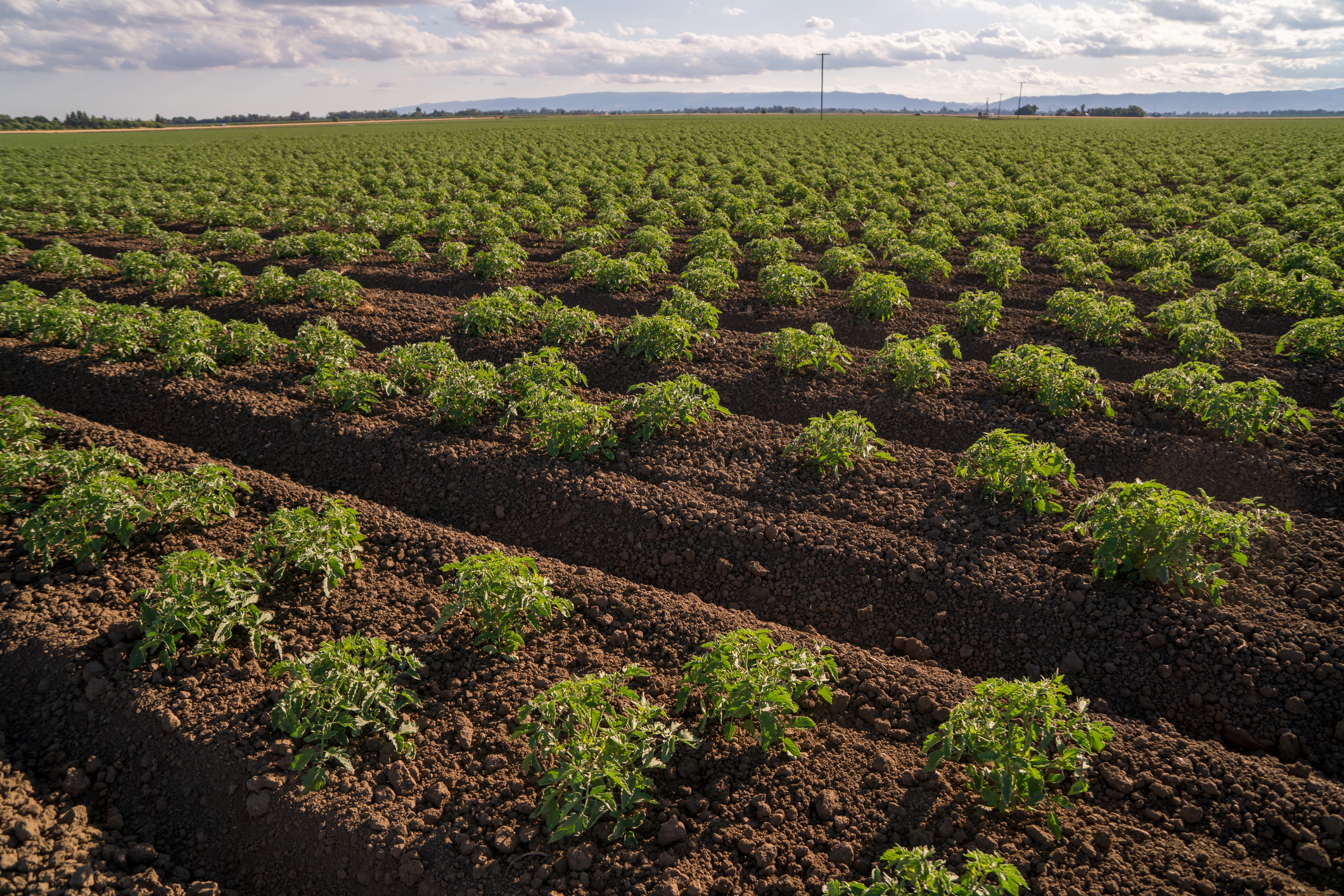
Taking T6P from glasshouse to field: testing our technology on tomatoes in California

By Dr. Cara Griffiths, 28 April 2026

At SugaROx, we often talk about bridging the gap between plant science and practical farming. This week marks an important step in that journey. We’re excited to share that we’ve been selected for the first H.A.R.V.E.S.T. AgTech cohort, led by The Yield Lab Institute, to progress testing of our caged T6P from controlled conditions to field trials in California.

Why tomatoes, and why California?

Tomatoes are one of the most widely consumed botanical fruits/culinary vegetables in the world. They are also one of the most sensitive crops to climate stress.

These plants perform best when daytime temperatures range between 20-30°C and night-time temperatures between 17-19°C. It has long been established that temperatures above 32°C reduce pollen viability and disrupt fruit set, leading to yield losses. Fruit colour, firmness, flavour, and nutritional value may also be affected.

The US is the world’s fourth-largest producer of tomatoes, with around 301,800 acres under cultivation each year. Approximately 90% of US processed tomatoes (and a quarter of the world’s total) are grown in California. However, this region is becoming increasingly exposed to heat stress, with the number of days above 37°C expected to rise from 5-7 per year historically to as many as 40-50 by the end of the century.

For growers, this translates into real economic pressure. Currently, there are limited tools available to respond to abiotic stress during the growing season, and disruptions to yield and quality ripple through the food supply chain – affecting companies who rely on consistent specifications for food manufacturing.

A different approach to biostimulants

Our technology is built on a simple idea: if plants already rely on intracellular molecules to stimulate growth, development and stress responses, why not deliver more of them directly when they are needed?

The challenge is that many of these molecules cannot be absorbed by plants when applied externally, due to their strong polarity. Our answer is what we call “chemical caging” –  a way to temporarily mask the molecule so it can enter the plant, before releasing it in its active form inside the cell.

This opens up the possibility of targeting specific intracellular processes with precision, including those involved in responses to heat stress.

Building on strong foundations

Trehalose-6-phosphate (T6P) is a natural plant sugar well described in the scientific literature for its role in regulating carbon use and allocation in plants via inhibition of the famine-signalling enzyme SnRK1.

Much of my research with the other academic co-founders of SugaROx has focused on wheat, and the model species Arabidopsis thaliana. However, its relevance extends across the plant kingdom. By combining T6P with our chemical caging technology, we have designed a biostimulant aimed at helping tomato plants better cope with stress.

Proof-of-concept studies conducted by our internal team have shown that our caged T6P can increase tomato yields by up to 8% under well-watered conditions, and up to 20% during heat stress, all under controlled environments. We are now approaching the completion of an Innovate UK-funded feasibility study, where Fera Science Ltd used high throughput digital phenotyping to assess the impact of our product on tomato plants under heat and drought stress.

Our collaboration with UC ANR

Through H.A.R.V.E.S.T., I am excited to be working with UC ANR Innovate, along with F3 Local, to test our caged T6P under field conditions in California. Just as importantly, this collaboration will allow us to better understand how our product fits into real-world farming systems and better articulate the value it can deliver to growers.

As we prepare for a Series A investment round to support registration and launch of our caged T6P biostimulant in the UK, EU and US, this work represents an important step. It helps us demonstrate the broader potential of our platform across crops, geographies and farming systems.

From wheat fields in the UK to tomato crops in California, the challenge is the same: helping plants perform under increasing environmental pressure. Our goal is to offer growers practical tools to meet that challenge – grounded in science and proven in the field.

Want to know more? Follow us on LinkedIn or contact us today.

Recent News Stories

Our Biostimulant FAQs are now live: Practical answers to farmers’ most common questions

Read More

What does the UK Farming Profitability Review mean for biostimulant ventures?

Read More

Review of academic literature highlights the importance of improving carbon production and use by plants to transform crop yields and quality

Read More

New research reveals weather variability tops list of UK farmers’ challenges

Read More

The biostimulants industry: A high-growth investment opportunity coming to life 

Read More

Taking T6P from glasshouse to field: testing our technology on tomatoes in California

By Dr. Cara Griffiths, 28 April 2026

At SugaROx, we often talk about bridging the gap between plant science and practical farming. This week marks an important step in that journey. We’re excited to share that we’ve been selected for the first H.A.R.V.E.S.T. AgTech cohort, led by The Yield Lab Institute, to progress testing of our caged T6P from controlled conditions to field trials in California.

Why tomatoes, and why California?

Tomatoes are one of the most widely consumed botanical fruits/culinary vegetables in the world. They are also one of the most sensitive crops to climate stress.

These plants perform best when daytime temperatures range between 20-30°C and night-time temperatures between 17-19°C. It has long been established that temperatures above 32°C reduce pollen viability and disrupt fruit set, leading to yield losses. Fruit colour, firmness, flavour, and nutritional value may also be affected.

The US is the world’s fourth-largest producer of tomatoes, with around 301,800 acres under cultivation each year. Approximately 90% of US processed tomatoes (and a quarter of the world’s total) are grown in California. However, this region is becoming increasingly exposed to heat stress, with the number of days above 37°C expected to rise from 5-7 per year historically to as many as 40-50 by the end of the century.

For growers, this translates into real economic pressure. Currently, there are limited tools available to respond to abiotic stress during the growing season, and disruptions to yield and quality ripple through the food supply chain – affecting companies who rely on consistent specifications for food manufacturing.

A different approach to biostimulants

Our technology is built on a simple idea: if plants already rely on intracellular molecules to stimulate growth, development and stress responses, why not deliver more of them directly when they are needed?

The challenge is that many of these molecules cannot be absorbed by plants when applied externally, due to their strong polarity. Our answer is what we call “chemical caging” –  a way to temporarily mask the molecule so it can enter the plant, before releasing it in its active form inside the cell.

This opens up the possibility of targeting specific intracellular processes with precision, including those involved in responses to heat stress.

Building on strong foundations

Trehalose-6-phosphate (T6P) is a natural plant sugar well described in the scientific literature for its role in regulating carbon use and allocation in plants via inhibition of the famine-signalling enzyme SnRK1.

Much of my research with the other academic co-founders of SugaROx has focused on wheat, and the model species Arabidopsis thaliana. However, its relevance extends across the plant kingdom. By combining T6P with our chemical caging technology, we have designed a biostimulant aimed at helping tomato plants better cope with stress.

Proof-of-concept studies conducted by our internal team have shown that our caged T6P can increase tomato yields by up to 8% under well-watered conditions, and up to 20% during heat stress, all under controlled environments. We are now approaching the completion of an Innovate UK-funded feasibility study, where Fera Science Ltd used high throughput digital phenotyping to assess the impact of our product on tomato plants under heat and drought stress.

Our collaboration with UC ANR

Through H.A.R.V.E.S.T., I am excited to be working with UC ANR Innovate, along with F3 Local, to test our caged T6P under field conditions in California. Just as importantly, this collaboration will allow us to better understand how our product fits into real-world farming systems and better articulate the value it can deliver to growers.

As we prepare for a Series A investment round to support registration and launch of our caged T6P biostimulant in the UK, EU and US, this work represents an important step. It helps us demonstrate the broader potential of our platform across crops, geographies and farming systems.

From wheat fields in the UK to tomato crops in California, the challenge is the same: helping plants perform under increasing environmental pressure. Our goal is to offer growers practical tools to meet that challenge – grounded in science and proven in the field.

Want to know more? Follow us on LinkedIn or contact us today.

Privacy Overview

This website uses cookies so that we can provide you with the best user experience possible. Cookie information is stored in your browser and performs functions such as recognising you when you return to our website and helping our team to understand which sections of the website you find most interesting and useful.